The Inconvenient Truth of the Flying Laptop
#TravelPersonal #TravelSpecialised
This article was written by Tim Chadwick and published by News24 on 30 November 2025
You may have missed this recent contribution to the annals of aviation absurdity. On 15 October 2025, a United Boeing 767 departed Washington Dulles for Italy. It was, by all accounts, a normal flight until roughly an hour in, when the pilots reported a problem that sounded like a bad joke.
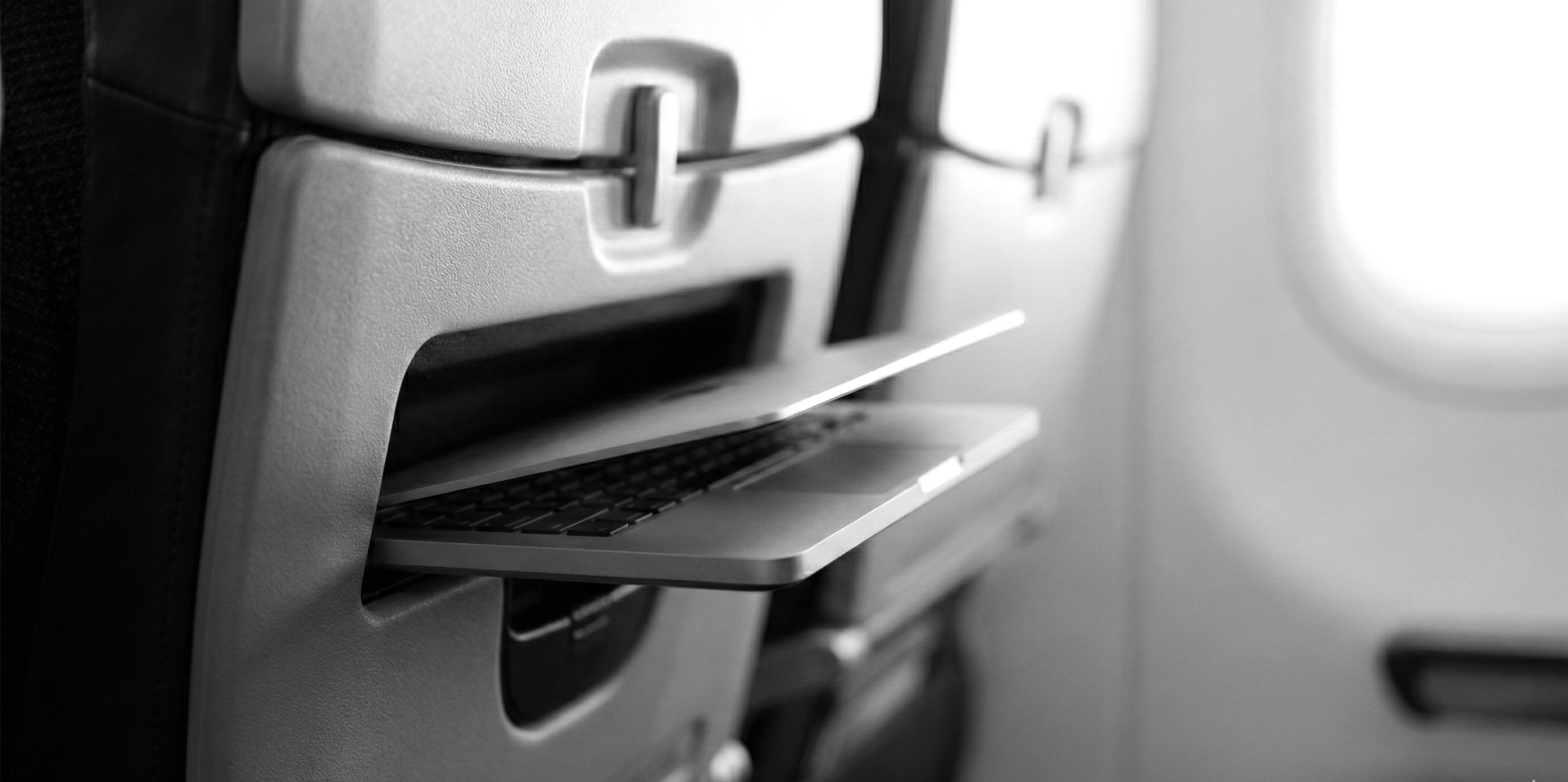
A passenger’s laptop, turned on and humming with intent, had slid off a tray table, slipped behind a cabin wall panel and vanished through a gap into the inaccessible abyss of the cargo hold. Most people assume modern aviation risk involves high altitude physics and the occasional unruly passenger. Few would guess it also includes a laptop attempting an unsupervised tour of the cargo hold mid flight.
Pause for a moment to appreciate the physics. A gap, hitherto unknown to the naked eye, swallowed a computer whole. The aircraft was forced to execute a U-turn near Boston, dumping fuel and the passengers back in Washington two hours later. It took ground crews three hours to fish the device out before the flight could eventually continue to Italy, no doubt with everyone treating their electronic devices with a little more respect.
To the casual observer, this is just another tale of modern travel misery. But to the trained eye, this is not a minor mishap. It is potentially a risk event of terrifying proportions.
Consider the alternative. Had that laptop’s lithium battery decided to set fire to itself in the cargo hold, a place where fire suppression is difficult and panic is inevitable, this would be a very different, far more tragic article.
This incident is a wake-up call. It exposes just how much the average traveller is operating on autopilot (pun not intended) regarding liability, strict liability and often the gaping, misunderstood holes in their insurance contracts.
Can Passengers Claim for Financial Losses From a Delay?
The short answer is, alas, almost never.
The longer answer is: alas, still almost never, barring a food voucher
Under global aviation regimes, airlines operate under strict liability for very specific categories of loss – primarily bodily injury, death, and baggage. Economic loss caused by delay, however, sits firmly outside that framework.
When you buy a ticket, you automatically accept the airline’s Conditions of Carriage. These terms are designed by lawyers to ensure that while the airline is strictly liable for your bodily injury or your lost pyjamas, they are almost never liable for your consequential economic loss.
In plain English, the airline promises to get you there, eventually. They do not promise to pay for the business you lost while sitting on the tarmac. You may get a food voucher, but do not expect a consequential loss settlement. It is not personal. It is contractual.
What If the Delay Was Another Passenger’s Fault?
People often imagine a courtroom showdown between Seat 34B and Seat 34C. In reality, the law is far less dramatic.
Passengers generally cannot claim against each other because strict liability sits with the airline. Only when a fellow passenger’s conduct crosses into negligence does personal liability come into play. Even then, the airline generally still pays the passengers’ loss first and sorts out the indemnity fight later.
The Rogue Battery Nightmare
What if the laptop in the hold, powered by a non-approved battery, goes rogue, ignites and the aircraft crashes?
Here is where the law becomes more serious.
- The airline carries strict liability to passengers and families.
- The airline and its insurer may pursue the passenger who installed the cheap, non-approved battery – the classic subrogation route
You may think your Personal Liability policy will save you. This is highly unlikely. Most personal liability policies have strict aviation exclusions, essentially excluding anything happening in the air or to do with an aircraft. And even if they didn’t, your personal liability limit is likely R1 million to R5 million, which unfortunately is inadequate for aviation losses. Personal liability insurance is not built to fund global catastrophe claims.
The solution is clear; avoid generic accessories and non-approved replacement parts at all costs.
The Maintenance Blame Game
A laptop does not miraculously fall through a floor structure, unless there was a maintenance or design defect. This leads to a natural question: what can passengers legally claim?
Passengers can only claim for what the law allows. Bodily injury, death or damage to their baggage and personal items, caused by the defect.
If the gap existed because of poor workmanship by a maintenance provider, the airline still pays first. Afterwards, the airline’s insurer will most likely pursue the maintenance company’s insurer for recovery.
If the gap existed because inspections failed, that is the airline’s responsibility and their general liability insurance should respond.
If the gap existed because a designer or engineer made an error, that points to an Errors and Omissions liability exposure. The liability shifts to the designer/engineer, but the process remains the same:
- Passengers claim from the airline.
- The airline and insurers settle with the passenger.
- Then everyone quietly trades legal letters in the background.
But none of this prevents the airline from recovering costs from a passenger, if the passenger’s negligent actions or inactions contributed to the loss. Liability does not vanish simply because the initial claim flows through the airline.
What Cover Should Travellers Have?
Air travel is safe. Incidents like this remain rare. But when losses occur, they are very expensive, multi-jurisdictional, and legally complex.
Think risk and cover:
Personal Liability
Have a baseline sum insured of R5m plus.
Check the exclusions, particularly aviation-related exclusions.
High Limit Travel Liability
Many entry-level travel liability policies start at R1m. Take the highest possible limit available when arranging cover.
Remember to look for worldwide jurisdiction, and comprehensive baggage and personal effects cover.
Umbrella Liability Insurance
Umbrella Liability is a crucial liability add-on, on most personal insurance policies, resulting in increasing your baseline Personal Liability sum insured, usually from say R5m to R20m plus.
For frequent travellers, this cover is essential.
This liability cover sits above your personal and travel liability policies and usually avoids proportionate loss contribution or limit-stacking disputes.
Personal Asset Cover
Ensure portable assets (i.e. jewellery, electronics, and clothing) are properly insured and correctly listed. These are the items most likely to be involved in a travel-related incident.
Battery and Device Safety
Using non-Original Equipment Manufacturer (non-OEM) batteries can shift liability onto the customer. OEM components generally carry product liability backing. Generic batteries usually do not.
The Bottom Line
The point is not to alarm. It is to create risk and insurance awareness:
- Understand what your liability insurance policies cover and do not cover
- Ensure your travel policies complement, not conflict with, your existing cover
- Review component risks, like aftermarket batteries
- Talk to a professional risk advisor
A small oversight can trigger a chain of financial losses far more severe than most people imagine.
Insurance is not about predicting disaster or covering small attritional losses which are best self insured. It is about ensuring you are not financially destroyed if something unexpected happens, like a laptop discovering a structural gap mid flight.
Recent Articles

This article was written by Tim Chadwick and published by News24 on 10 May 2026 Not Sharp Sharp #MotorInsurance #Personal #MotorClaim Better to pay a little for a risk advisor than try to save coin only to find…

This article was written by Tim Chadwick and published by ITWeb, Lifestyle & Tech and AI Impact on 21 April 2026 Waiting #Specialized #BusinessCyber #RiskManagement #CutRiskNotCorners Everyone at some point clicks something they should not have. An email…

#Business #Engineering #RiskManagement This article was written by Tim Chadwick and published by MoneyMarketing on 30 March 2026 Somewhere Near Dubai The Strait of Hormuz, until recently, occupied the same mental real estate for most South Africans as your IT guys 2 hour…