Business Insurance – Tunnel Vision. Who Pays When The Road Is Closed?
#RiskManagement #GoodsInTransit #SupplyChain
This article was written by Tim Chadwick and published by News24 on 27 October 2025
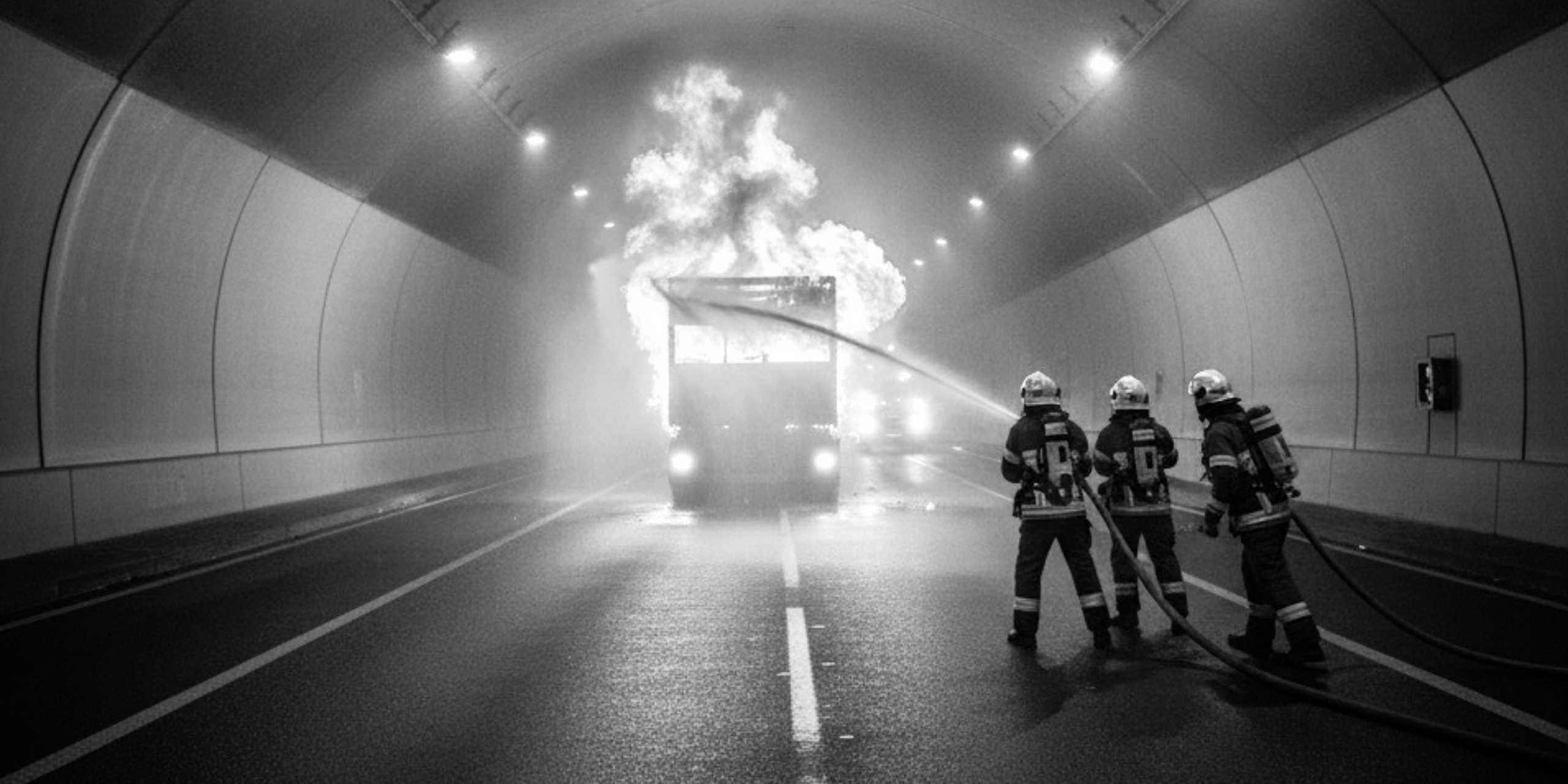
Earlier this month a bus caught fire inside Africa’s longest road tunnel, the Huguenot Tunnel. The flames were sorted out “chop chop”. The traffic, not so much. Like a braai without firelighters, everything smoked for about two weeks. For most drivers, it meant longer trips and irritation. Still, we are South Africans, we do not sit still, we find another road, dodge a few potholes and carry on. Ja well, no fine.
It was far more than an irritation for businesses who rely on the N1 link between Worcester and Cape Town, it exposed how easily normal operations can unravel when shared infrastructure fails and how it can cause serious financial loss.
Who Carries the Cost?
The closure slowed freight traffic, lifted fuel use, delayed deliveries and tied up cashflow.
In voicing their frustration, many business owners asked the same question. Who pays when a public asset goes offline?
Responsibilities in the Chain
SANRAL operates the tunnel and could face liability if poor maintenance or slow response caused financial loss. Courts have already held road authorities responsible for road hazards, including pothole cases worth over R15 million.
The bus company’s motor liability cover may respond if negligence is proven, but on average motor liability limits range between R2,5 million and R20 million, which may be inadequate for these type of disasters, especially where multiple claimants are involved or if the motor liability cover is limited to the annual aggregate (meaning, the policy doesn’t pay more than a predetermined amount in a 12 month period).
Other businesses, like trucking firms, fuel depots, food producers, tourism operators often cannot recover anything, since their property was not directly damaged, meaning standard business interruption policies do not trigger.
One Word Can Make All The Difference
In insurance, one word and one risk advisor can make all the difference.
The “Prevention of Access” and “Prevention of Access (Extended Cover)” extensions of business interruption cover, which are freely available in South Africa, are differentiated by one word and are often misunderstood by clients and insurance practitioners. In case of the Huguenot Tunnel closure, one word can make huge difference in cover.
For Prevention of Access – Basic Cover, the policy uses “insured’s premises,” meaning cover usually applies when insured physical damage to property within a 10-20 km radius prevents or hinders access to or use of the specific business location listed in your policy schedule (e.g., your shop or office), causing a reduction in turnover. Your premises does not need to be damaged.
For Prevention of Access – Extended Cover, the policy only uses the word “premises,” which infers cover for insured physical damage within a 10 -20km radius that prevents or hinders access to or use of your business’s physical location. Both clauses usually require the damage to be of a nature covered under your assets insurance policy (e.g., fire or flood) and to cause a reduction in turnover by impacting the premises’ use or access, not just general business disruptions.
These extensions are often sub-limited. For broader off-site risks, such as damage to a supplier or customer’s premises (even far away), separate cover extensions are needed.
The takeaway for policyholders is that it is essential to read and understood your insurance contract and if reading voluminous insurance policies is not your thing, find a professional risk advisor to guide you.
Where Standard Policies Fall Short
As mentioned, business interruption cover usually only applies if your insured property is damaged and since the tunnel is not your property, any consequential loss claim is doomed from the outset.
Denial of access extensions help in some cases, but have radius limitations and other damage conditions, which not all businesses meet. They usually:
- Have a radius limit (damage must occur in the vicinity of the premises, often within 20 km)
- May be limited to an insured peril operating, like fire or flood affecting access
- Have losses capped at a predetermined time period
- Have a monetary sub limit
Lessons From Previous Disasters
I recall when Chapman’s Peak closed for three years back in 2000. Three years – in South Africa that is two elections, a few cabinet reshuffles and at least one new Eskom CEO. This closure caused some businesses to collapse, as this event was not insurable since there was no insured physical damage to insured assets
Another example occurred during the 2022 KZN floods, large insurers like Tokio Marine paid claims and then sued local authorities for R6.5 billion, alleging poor maintenance. There is a lesson. Subrogation only works when your insurance pays first. Without that initial payout, you carry this catastrophic cost alone.
Contingent Business interruption (CBI)
Contingent Business interruption (CBI) insurance exists for scenarios, like the tunnel, where damage occurs to facilities or utilities you depend on, but do not own, cause a reduction to your turnover.
Few South African firms include it, usually because it either costs more, is not explained properly or is not offered to clients at risk analysis stage. Some CBI extensions may also be time capped, some to 90 days or possibly, even shorter periods.
Any risk advisor worth their salt will always encourage their clients to insure CBI extensions to full the extent of what is offered by the SA insurance market, as no one has a crystal ball – who knows when and where the next Huguenot Tunnel will be.
Steps Worth Taking
- Map dependencies. Identify roads, ports, suppliers and utilities that underpin your business.
- Ask direct questions. What happens to cover if the N1 shuts for a month? If Durban Port closes again? If a main power substation nearby is damaged
- Take the widest business interruption cover. Do a proper risk analysis with professional, extend radius limits, check sub limits and sums insured
Final Thoughts
Keep in mind, that when insurers pay, they will invariably pursue negligent entities through litigation for the legal recovery of their financial outlay. Without a valid liability claim, these entities are stuck funding lawsuits and onerous financial judgments made by our courts.
Infrastructure failures will keep happening. South Africa’s maintenance backlog exceeds R420 billion. Climate and other emerging risks are not slowing down.
Huguenot’s closure hurt for two weeks or so and then reopened, smooth as ever. South Africans sighed, smiled and hit the road. Same bakkies, same potholes, same patience. We moan, we fix, we braai. For SA business however, the next closure or similar event might run for many months or years. Protecting your business means shifting from hoping someone else pays to having confidence that your policy will perform. And there is only one way to do this. Through ongoing proper risk analysis.
Recent Articles

This article, written by Tim Chadwick was published by Biz Community and News24 on the 28th of June 2026. #SASRIA #BusinessInsurance #BusinessInterruption Frikkie van der Merwe is multitasking. He is parked off on his well worn kitchen stool, demolishing…

This article was written by Tim Chadwick and published by News24 on 10 May 2026 Not Sharp Sharp #MotorInsurance #Personal #MotorClaim Better to pay a little for a risk advisor than try to save coin only to find…

This article was written by Tim Chadwick and published by ITWeb, Lifestyle & Tech and AI Impact on 21 April 2026 Waiting #Specialized #BusinessCyber #RiskManagement #CutRiskNotCorners Everyone at some point clicks something they should not have. An email…